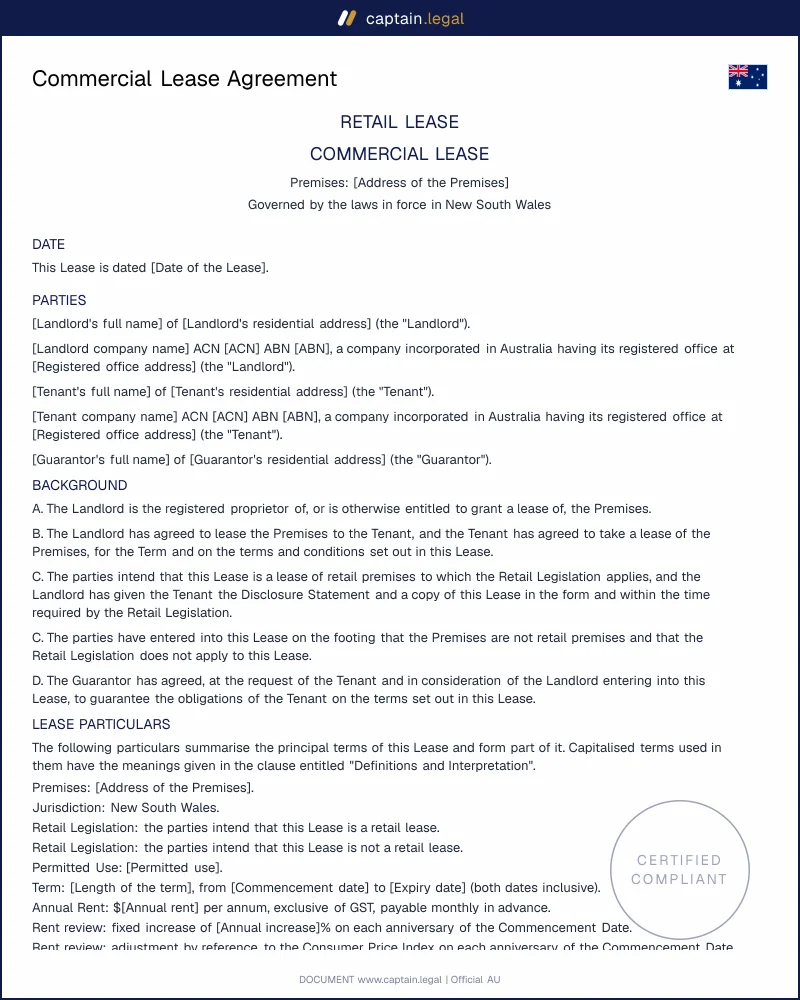
Retail leasing is regulated state by state. The principal statutes are the Retail Leases Act 1994 (NSW), the Retail Leases Act 2003 (Vic), the Retail Shop Leases Act 1994 (Qld), the Commercial Tenancy (Retail Shops) Agreements Act 1985 (WA) and the Retail and Commercial Leases Act 1995 (SA), with equivalent laws in Tasmania, the ACT and the Northern Territory. They share one architecture. Each Act operates despite the lease, so a clause that contracts out of the statute is void to the extent of the inconsistency. The landlord must deliver a lessor's disclosure statement before the lease is entered into, and in New South Wales s.11 lets the tenant terminate within 6 months and claim compensation if the statement was missing, incomplete or materially misleading. The full text, including the Schedule 2 disclosure form, is in the current NSW Retail Leases Act 1994 published by NSW Legislation.
Leases outside the retail regime rely on general property statutes: the Conveyancing Act 1919 (NSW), the Property Law Act 1958 (Vic) and the Property Law Act 2023 (Qld), which commenced on 1 August 2025 and requires a landlord to decide a consent request within one month of receiving the required particulars (s.142).
Two Commonwealth layers sit on top. The unconscionable conduct provisions of the Australian Consumer Law reach leasing negotiations, and since 9 November 2023 unfair terms in standard form small business contracts, leases included, attract civil penalties. When a party is a company, execution follows s.127 Corporations Act 2001, which is where the tenant's company constitution and rules on who can sign become relevant.