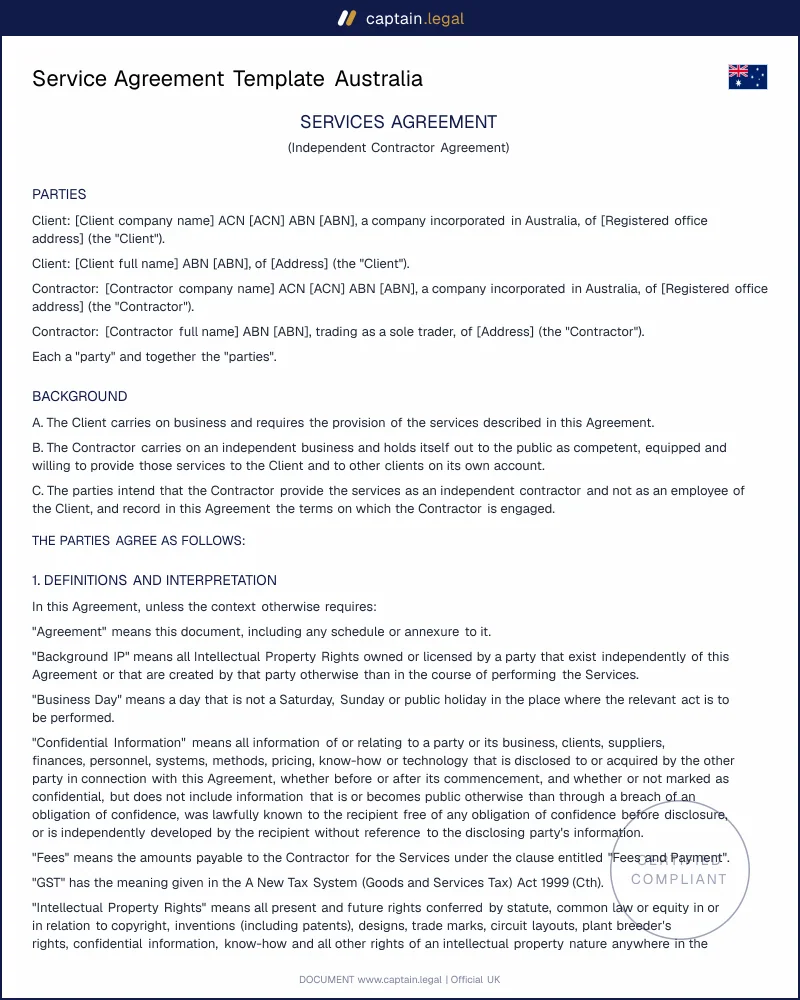
A service agreement is a contract for services, not a contract of service. That single preposition carries the whole distinction. Under a contract of service, a worker sells their labour and puts themselves at the direction of an employer, who then owes them the National Employment Standards, a modern award or enterprise agreement rate, superannuation, paid leave and notice on termination. Under a contract for services, an independent business sells a result. The contractor quotes, invoices, carries their own insurance, wears the risk of profit and loss on the job, and generally decides how the work gets done.
The names people use are interchangeable in practice. A Service Agreement, an Independent Contractor Agreement, a Consultancy Agreement and a Contractor Services Agreement all describe the same instrument, and the label on the front page has no legal effect whatsoever. What matters is what the document actually says and, since 26 August 2024, how the parties behave once the ink dries.
The comparison worth drawing is with an employment contract, which you will find among our Australian employment law templates. An employment contract assumes an ongoing relationship of subordination and imports a mandatory statutory floor that no clause can contract out of. A service agreement assumes two businesses dealing at arm's length, where nearly every term is negotiable. Choosing the wrong instrument is not a paperwork problem, it is a liability that compounds across superannuation, PAYG withholding, payroll tax, workers' compensation premiums and Fair Work penalties.