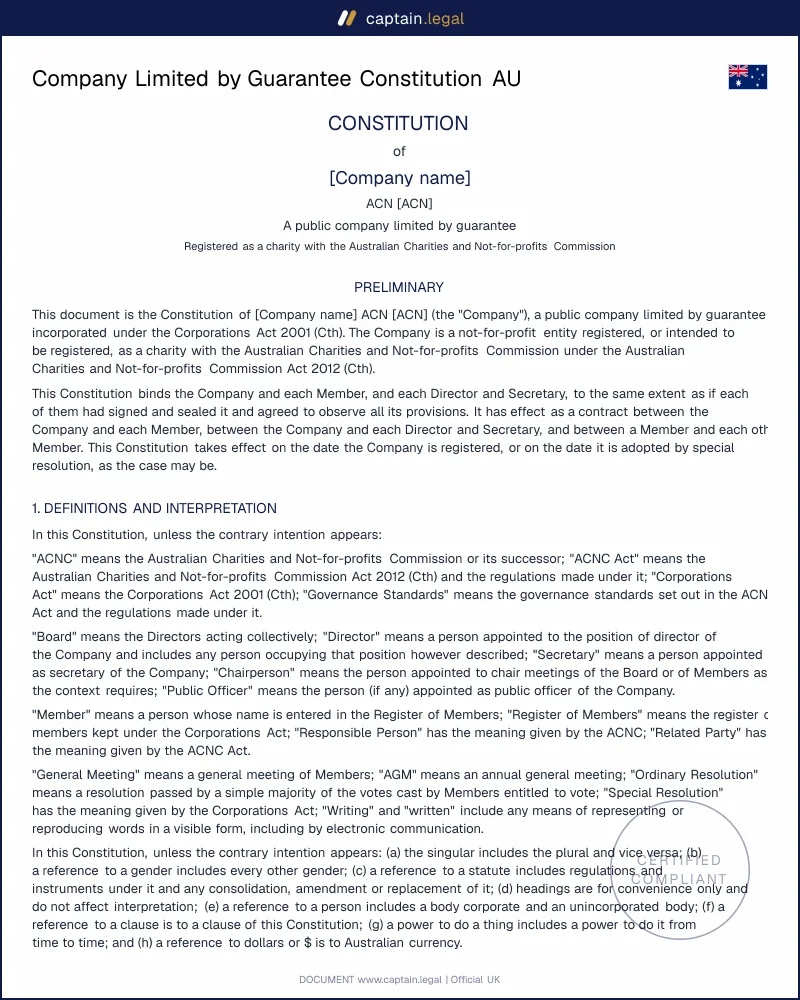
The most common trigger is registering a new charity from scratch. You have a cause, a founding group, and a plan to seek grants or tax concessions, and you have decided the CLG structure fits because you will operate nationally or hold significant funds. Before ASIC will register the company and before the ACNC will grant charity status, you need a constitution with compliant objects, non-distribution and winding-up clauses. Filing with generic articles or the bare replaceable rules simply does not clear the ACNC threshold.
Converting or upgrading is the next scenario. An unincorporated group that has outgrown a handshake arrangement, or an incorporated association that keeps hitting the ceiling of single-state registration, moves to a CLG to gain national standing and easier access to larger funders. Growth and funding conditions push others across the line: major grant-makers and government tenders frequently require an incorporated body with a proper governing document, audited accounts, and evidence that the board approved its own policies. A CLG constitution is the backbone that makes those ACNC governance and compliance requirements achievable rather than aspirational.
There is also the amendment case, which people underestimate. Changing your objects, adding a membership class, altering the guarantee amount, or applying to drop Limited from the name each requires a special resolution of members, and the ACNC must be notified of the change through the Charity Portal. Skip the notice period or fall short of the voting threshold and the amendment is invalid, which can stall bank signatory changes and grant agreements until you redo the meeting properly.