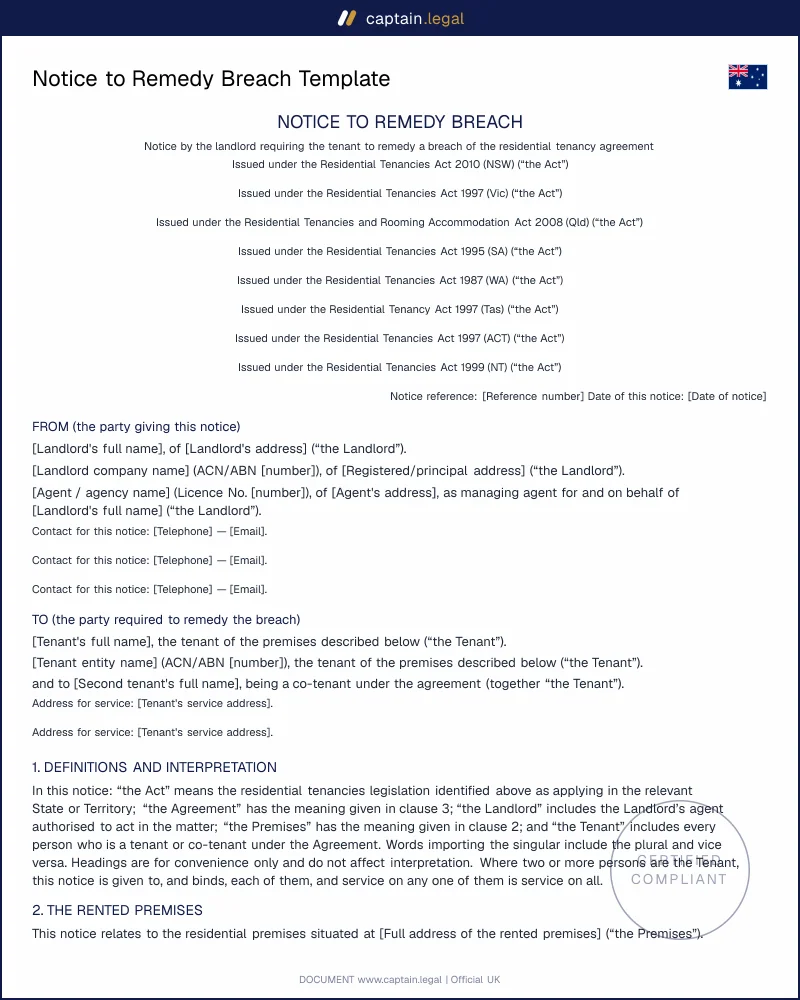
New South Wales runs its breach process under the Residential Tenancies Act 2010 (NSW). For non-payment of rent the tenant must be at least 14 days in arrears before a non-payment termination notice can issue, and any breach based termination notice under section 87 must give a termination date at least 14 days ahead under section 87C. A landlord cannot physically evict; only NCAT can make a termination order, and it may refuse if the tenant has remedied the breach.
Victoria is the outlier. Under section 208 of the Residential Tenancies Act 1997 (Vic) a rental provider serves a breach of duty notice, which is only available for breaches of a defined statutory duty. The renter has 14 days to comply, or 7 days where the breach concerns quiet enjoyment. Three breaches of the same duty, each preceded by a valid notice, can lead to a 14 day notice to vacate on the third occasion. Electronic service is only valid under the Electronic Transactions (Victoria) Act 2000.
Queensland uses the prescribed Form 11 under the Residential Tenancies and Rooming Accommodation Act 2008 (Qld). A property manager or owner gives the tenant 7 days to remedy a general breach; if it is not fixed, a Form 12 Notice to leave follows. The reverse also applies, a tenant can serve the same Form 11 on the lessor and escalate to a Form 13. The form is kept by the parties and is not sent to the RTA.
Western Australia, governed by the Residential Tenancies Act 1987 (WA) as amended in 2024, uses the Form 21 Breach Notice giving 14 days to pay rent or fix another breach. Only after that window can a landlord issue a Form 1A or Form 1C termination notice, and disputes run through the Magistrates Court rather than a tribunal. Clearing the arrears inside the 14 days ends the matter.