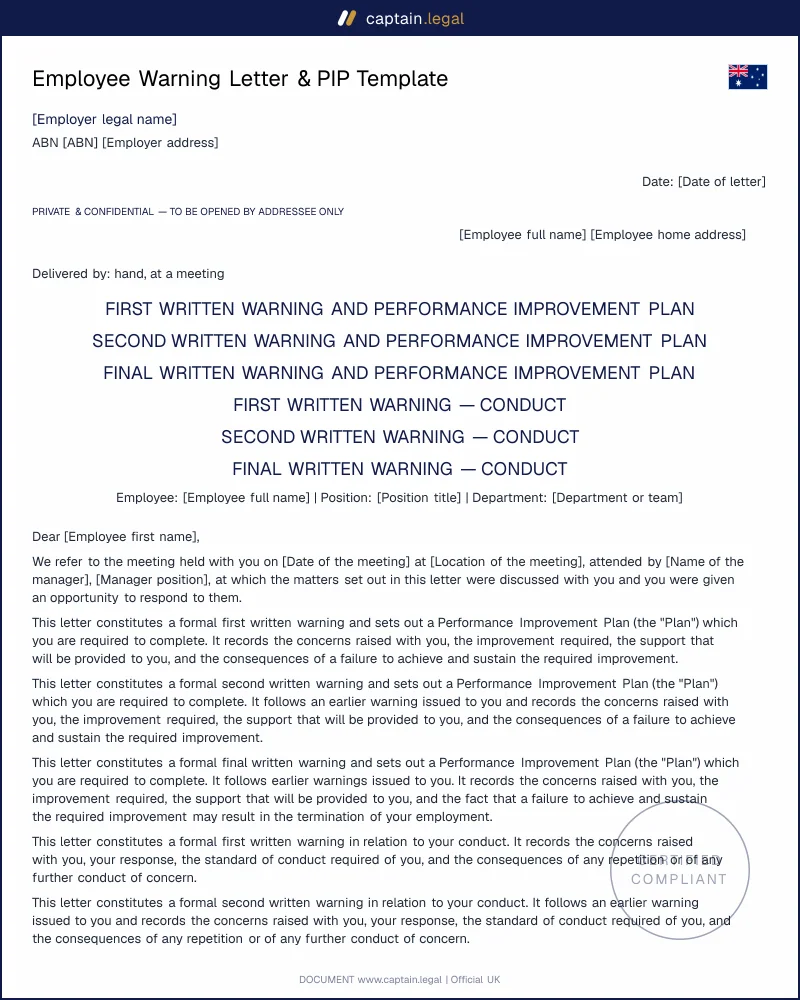
The standard trigger is a recurring performance shortfall that informal coaching has not shifted. A sales consultant misses quota across two quarters, a payroll officer keeps producing errors that others have to unwind, a technician's job completion rate sits well below the team. Once you have raised it verbally twice and nothing has changed, the next conversation should be documented, because the third informal chat is worth nothing in front of the Commission.
Conduct matters that fall short of serious misconduct occupy the second bracket. Chronic lateness, refusal to follow reasonable and lawful directions, breaches of a social media or workplace policy, low level rudeness to colleagues. Serious misconduct under the Code covers theft, fraud, violence and serious breaches of occupational health and safety procedures, and those warrant summary dismissal rather than a warning. Everything below that line runs through the warning process. If you are unsure which side of it you are on, warn.
A third scenario catches employers by surprise : the employee who was hired into the wrong role. Capacity gaps that emerge after probation still need a PIP, because you cannot dismiss for underperformance you never named. Restructures and role changes create a similar trap, where an employee is measured against a scope they were never told about. Two edge cases deserve flagging. An employee on a PIP who lodges a bullying, discrimination or workplace health and safety complaint immediately raises adverse action risk under Part 3-1 of the Act, and the burden of proving the plan was not a response to the complaint falls on the employer. Second, where underperformance is linked to a medical condition or disability, a PIP that ignores reasonable adjustments walks straight into a general protections claim. In both situations the plan still proceeds, but the documentation has to show the causal chain was performance and only performance.