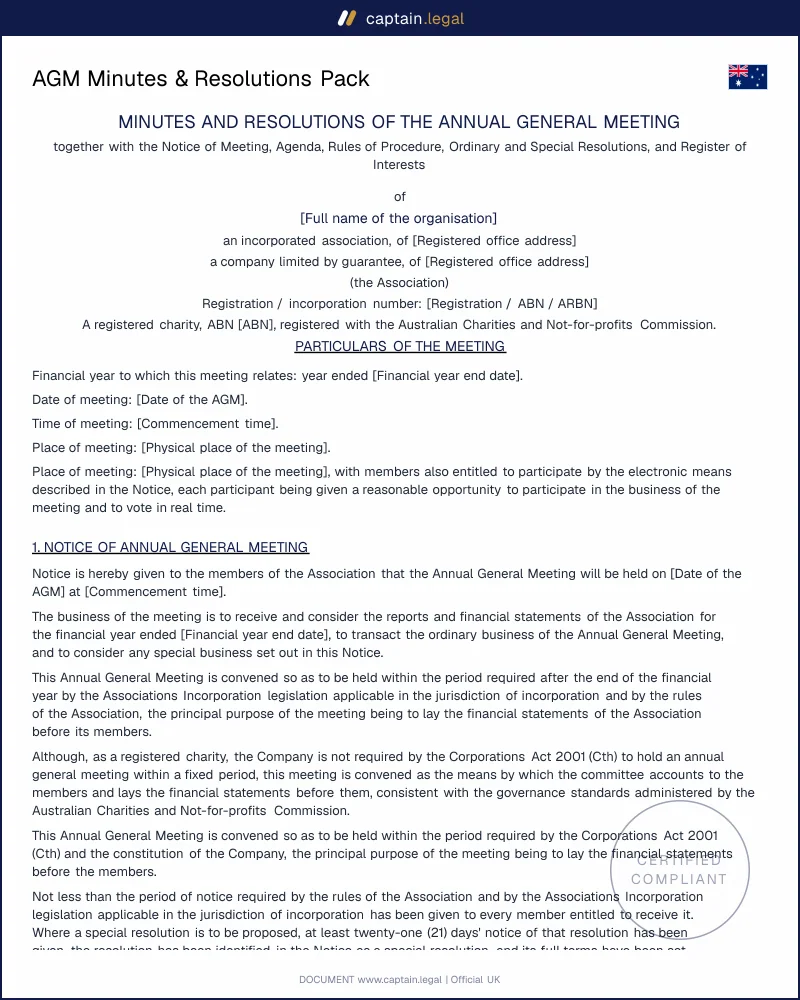
New South Wales associations operate under the Associations Incorporation Act 2009 (NSW) and the Associations Incorporation Regulation 2022. A special resolution passes on at least three-quarters of votes cast and is reserved for changes to name, objects, constitution, amalgamation, and winding up. Where a special resolution changes the name, objects, or constitution, the association must lodge it with NSW Fair Trading within 28 days. The AGM must be held within six months after the financial year end, and a new association's first AGM within eighteen months of incorporation. Postal and electronic ballots are expressly permitted even if the constitution is silent, provided they follow the regulation's schedule.
Victoria runs the Associations Incorporation Reform Act 2012, administered by Consumer Affairs Victoria. The Act sets meeting procedures, special resolution requirements, and the reporting obligations tied to the association's tier, which is determined by revenue. Committees should confirm their tier before the AGM because it drives whether financial statements need review or audit, and the minutes should reflect which reporting pathway was adopted.
Queensland associations fall under the Associations Incorporation Act 1981 (Qld), overseen by the Office of Fair Trading. Quorum for an AGM is tied to the number of members elected to the management committee, and the Act carries its own model rules that apply where an association has not adopted its own. Getting quorum wrong is a common way Queensland committees invalidate an otherwise sound meeting.
Western Australia applies the Associations Incorporation Act 2015 (WA), administered by Consumer Protection. An association must hold its AGM once each calendar year within six months after the end of its financial year, and the Commissioner can grant an extension only if the request is lodged before that window closes. Ask for the extension late and it cannot be granted, which leaves the committee in breach.