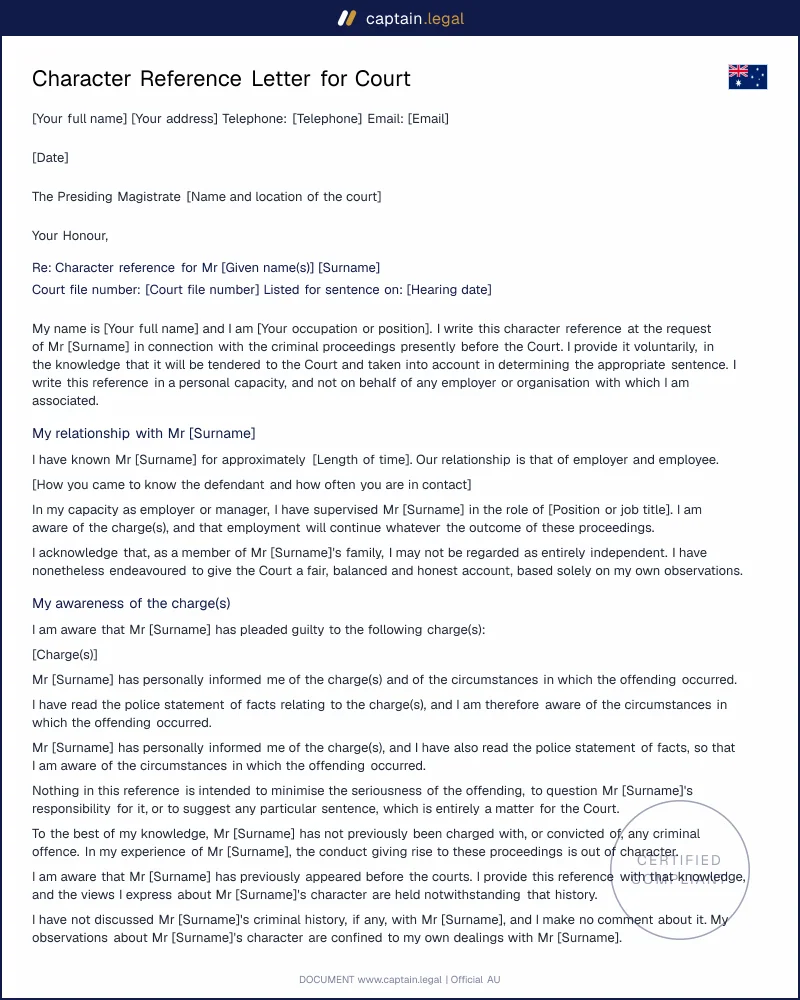
New South Wales is in transition. Good character is listed as a mitigating factor in s 21A(3)(f) of the Crimes (Sentencing Procedure) Act 1999 (NSW), and character also appears in the s 10(3)(a) test for dismissing a charge without conviction. Sexual offences are already carved out by s 21A(5AA). Once proclaimed, the Good Character at Sentencing Act 2026 removes s 21A(3)(f), strips "character" from s 10(3)(a), and bars evidence led solely to establish good character. References stay relevant to remorse, rehabilitation and the likelihood of reoffending under s 21A(3)(g) to (i), so the template steers NSW referees toward observed conduct rather than general praise. Confirm with the defence solicitor whether the reform is in force on the sentencing date before the letter is finalised.
In Victoria, s 5(2)(f) of the Sentencing Act 1991 (Vic) lists the offender's previous character as a sentencing factor, and s 5AA removes good character from the scales for certain sexual offences where it facilitated the crime. References carry particular weight on applications to proceed without recording a conviction, where s 8(1)(b) directs the court to the character and past history of the offender. The Magistrates' Court of Victoria expects referees to stay away from recommending a sentence.
Queensland courts must consider the offender's character, age and intellectual capacity under s 9(2)(f) of the Penalties and Sentences Act 1992 (Qld), and s 12(2)(b) repeats the character test when the court decides whether to record a conviction. Recent amendments confine the mitigating weight of good character for some offence categories to its bearing on rehabilitation and the risk of reoffending, which suits a reference built on concrete observation.
By contrast, courts in Western Australia have no dedicated character factor and no statutory carve-out for child sexual offences. References are tendered under s 8(1) of the Sentencing Act 1995 (WA), which admits any factor reducing culpability. They also support spent conviction orders under s 45, where the court must be satisfied the offender is unlikely to reoffend.