
If your business runs on casual labour, the ground shifted under you on 26 August 2024. That is the day the Fair Work Legislation Amendment (Closing Loopholes No. 2) Act 2024 replaced the definition of a casual employee in the Fair Work Act 2009 (Cth), and with it the whole basis on which a casual arrangement stands or falls. The old rule asked what the contract said. The new one asks what the relationship actually is. For any employer relying on a contract drafted before that date, the question is uncomfortable but unavoidable: does the paperwork still describe a casual, or does it now describe a permanent employee in disguise? Getting this wrong no longer means a technical breach. It can mean back-paid entitlements, penalties, and in the worst cases criminal exposure for underpayment.
What the new casual definition actually says
Under the current section 15A of the Fair Work Act 2009, a person is a casual employee only if, at the time the offer of employment is made, the relationship is characterised by an absence of a firm advance commitment to continuing and indefinite work, and the employee is entitled to a casual loading or a specific casual rate under an award, enterprise agreement or the contract. That first limb is the one that trips employers up. Whether a firm advance commitment exists is no longer settled by the words on the page.
The reform imports the reasoning behind the broader section 15AA test, which directs everyone to look at the real substance, practical reality and true nature of the working relationship rather than the label the parties chose. A contract can state in bold that the employee is casual, and that statement is now just one factor among several. What matters is how the arrangement runs day to day: whether there is a regular pattern of work, whether the employer can elect to offer or not offer shifts, whether the employee can accept or reject them, and whether the practical expectation is that the work continues indefinitely.
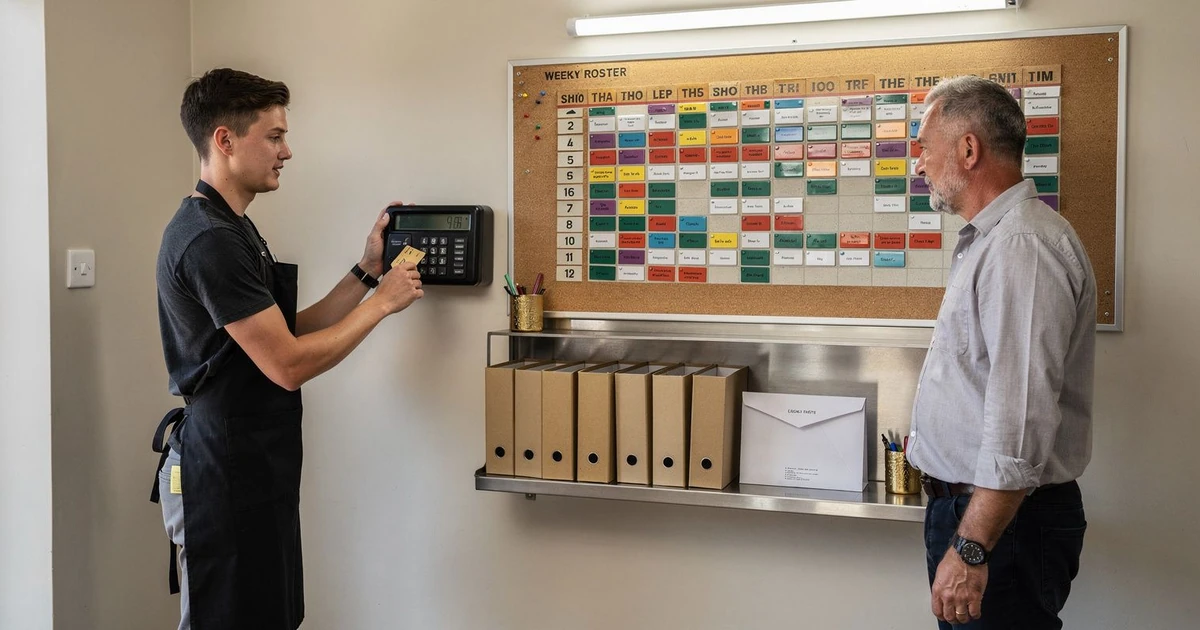
A roster that never changes for two years is the classic warning sign. If your "casual" works the same shifts every week with a settled expectation of ongoing work, the loading you pay does not automatically preserve casual status. The substance can override the form, and that is precisely the exposure the reforms were designed to create.
Legal framework: definition, conversion and the CEIS
Three moving parts sit inside the current regime. The definition in section 15A is the foundation, and it applies to anyone engaged from 26 August 2024, while employees who were genuinely casual immediately before that date carry their status forward unless they move to permanent work. Layered on top is the employee choice pathway, which replaced the old employer-driven casual conversion. Since 26 August 2024, and with the first notices available from 26 February 2025 for non-small-business employees, an eligible casual who has been employed for at least six months (twelve months in a small business) and who believes they no longer meet the casual definition can give written notice asking to move to permanent employment. An employer can refuse only on specified grounds, and refusing to avoid the obligation is itself unlawful.
The third element is paperwork most employers still under-manage. The Casual Employment Information Statement must be given to every new casual at the start, and for non-small businesses it must be reissued after six months, again at twelve months, and every twelve months after that. Small businesses reissue it after twelve months. Missing these intervals is a straightforward compliance failure that surfaces immediately in any audit. The full detail on the definition, the pathway and employer obligations is set out in the Fair Work Ombudsman guidance on the casual employment changes.
There is also a sharper edge. Since 1 January 2025, intentional underpayment of wages or entitlements can be prosecuted as a criminal offence, and civil penalties for underpayment have risen. Misclassifying a permanent worker as casual is one of the routes into exactly that territory, because it typically means unpaid leave and other permanent entitlements accruing quietly in the background.
Why your existing casual contract may already be non-compliant
Most casual contracts written before the reforms do one thing well and one thing badly. They state clearly that the employee is casual and set out the loading, which is fine. What they usually lack is any acknowledgement that casual status now turns on substance, and any mechanism to keep the arrangement genuinely casual over time. A contract that promises "as and when required" work but is then rostered like a permanent position creates a gap between the document and the reality, and it is that gap the section 15A test reaches into.
The safer approach is a contract that does more than assert a label. It should record that no firm advance commitment to ongoing work is made, spell out that shifts are offered and accepted on a case-by-case basis, and avoid language that implies a guaranteed roster or indefinite continuation. A contract built to the current section 15A framework, like a properly drafted casual employment contract template, separates the casual loading from base pay, references the employee choice pathway, and prompts the employer to hand over the CEIS at the right intervals. None of that guarantees casual status on its own, but it aligns the paperwork with how a genuine casual arrangement should run.
Where a role has drifted, the honest fix is often to convert rather than paper over the drift. If someone is working a fixed pattern with a settled expectation of ongoing work, a well-structured permanent employment contract removes the risk at the source, and it is far cheaper than defending a misclassification claim after the fact.
The contractor overlap you cannot ignore
The Closing Loopholes reforms did not stop at casuals. The same section 15AA "real substance" test now governs the line between employee and independent contractor, which means the two classification risks feed each other. A business that leans on casuals and contractors to stay flexible is exposed on both fronts at once, and the analysis is the same: strip away the label and ask what the relationship really is. If a contractor works set hours, uses your equipment and looks like part of the team, the contract calling them a contractor carries far less weight than it once did.
For any engagement that sits near the boundary, the terms should be drafted to reflect genuine independence rather than to assert it. A clear independent contractor agreement that addresses control, tools, delegation and the basis of payment is the document that has to stand up when the arrangement is tested, and vague or boilerplate terms are a liability. Where casuals and contractors interact with your customers or systems, it is also worth making sure your customer-facing terms and conditions do not accidentally describe those workers in ways that undercut their claimed status.
Bringing your casual paperwork up to date on Captain.Legal
Getting compliant does not mean tearing up every arrangement. The practical starting point is an audit of who is genuinely casual against the current definition, and then matching each person to the right document. Working through the Australian employment templates, you choose the arrangement that reflects reality, casual, part-time or full-time, and the builder walks you through loading, hours, duties and the acknowledgements the reforms now expect.
For a worker who is still genuinely casual, the platform produces a contract that records the absence of a firm advance commitment, references the employee choice pathway and flags the CEIS reissue schedule. For someone whose role has become permanent in substance, you generate the permanent contract instead and retire the casual wording. The documents come in editable Word plus print-ready PDF, so you can tailor a clause to a specific role and still keep a clean signed copy on file. Because casual status is now something you have to maintain rather than declare once, keeping the editable version matters: when a roster settles into a pattern, you want to revisit the arrangement rather than discover the mismatch during a claim.
Common mistakes employers keep making
The most damaging mistake is treating the casual label as decisive. Employers still assume that because the contract says casual and pays a loading, the status is locked in, when the current section 15A test looks straight past the label to the pattern of work. Close behind is rostering a casual exactly like a permanent employee, month after month, and never revisiting whether the arrangement is still genuinely casual. That settled, predictable roster is often the single fact that unravels casual status.
Employers also routinely mishandle the Casual Employment Information Statement, handing it over once on day one and forgetting the six and twelve-month reissue obligations that now apply. Another frequent error is mishandling an employee choice notice, either ignoring it or refusing it on grounds the Act does not permit, which converts a paperwork issue into an adverse action risk. Reducing a casual's hours or ending their engagement to dodge a conversion request is expressly prohibited and treated as interfering with a workplace right. Finally, many businesses still manage performance and discipline for casuals informally, when a documented process using a proper warning letter and improvement plan protects them just as it does for permanent staff.
Frequently asked questions
What is the new definition of a casual employee in Australia?
Since 26 August 2024, section 15A of the Fair Work Act 2009 defines a casual as someone whose employment, at the time of the offer, has no firm advance commitment to continuing and indefinite work, and who receives a casual loading or specific casual rate. Crucially, whether that commitment exists is judged on the real substance and practical reality of the relationship, not just the contract wording. A regular, predictable roster with an expectation of ongoing work can mean the person is not genuinely casual, regardless of what the paperwork says.
Do I need to rewrite my casual contracts because of Closing Loopholes?
If your casual contracts predate 26 August 2024 and simply assert casual status without reflecting the substance test, they carry real risk. You do not have to rewrite everything overnight, but you should audit your casual workforce, update your standard template so new hires are covered, and reissue contracts where the old wording no longer fits how the person actually works. Where a role has become permanent in practice, the better fix is to move that person onto a permanent contract rather than patch the casual document.
Is an employment contract generated online legally valid in Australia?
Yes. Australian law does not require an employment contract to be prepared by a lawyer or signed on paper to be enforceable. A written agreement accepted by both parties, whether signed by hand or electronically under the Electronic Transactions Act 1999, is binding as long as its terms do not fall below the National Employment Standards, a modern award or an enterprise agreement. With casual arrangements, the contract cannot manufacture casual status on its own, but a well-drafted one gives you clear terms and the paper trail that supports a genuine casual engagement.
What is the employee choice pathway and how quickly must I respond?
The employee choice pathway lets an eligible casual give written notice that they want to become permanent because they believe they no longer meet the casual definition. Eligibility requires at least six months of employment, or twelve months in a small business. Once you receive a valid notice, you must consult and respond within the timeframe set by the Act, and you can only decline on specified grounds such as the person still meeting the casual definition or genuine operational reasons. Refusing to avoid the obligation, or cutting hours to sidestep it, is unlawful.
How often do I have to give a casual the Casual Employment Information Statement?
Every casual must receive the Casual Employment Information Statement when they start. Beyond that, a non-small business must give it again as soon as practicable after six months, again after twelve months, and every twelve months after that. A small business reissues it after twelve months. These intervals are easy to overlook and are among the first things checked in a compliance review, so building the reissue schedule into your onboarding and record-keeping is worth the effort.
Can I keep someone as a casual indefinitely if I keep paying the loading?
Not reliably. Paying a casual loading is one requirement of casual status, but it does not preserve that status on its own once the working pattern looks permanent. If a person works a fixed, predictable roster over a long period with a settled expectation of ongoing work, the substance of the relationship can make them permanent in the eyes of the Fair Work Act 2009, loading or not. At that point you may owe permanent entitlements, and continuing to treat them as casual increases rather than reduces your exposure.
What format can I download the contract in, and can I edit it later?
Documents on Captain.Legal come in editable Microsoft Word and print-ready PDF. The Word version lets you adjust clauses for a specific role, add rostering expectations or update the loading before signing, while the PDF gives you a clean copy to sign and keep. Retaining the editable file matters under the current casual rules, because if an arrangement drifts toward a permanent pattern you can revisit and update the contract quickly, rather than being stuck with wording that no longer matches reality.
What are the penalties for misclassifying a permanent employee as casual?
Misclassification can leave you owing back-paid permanent entitlements such as annual and personal leave, on top of any loading already paid. Civil penalties apply for breaches of the Fair Work Act, and since 1 January 2025 intentional underpayment of wages or entitlements can be prosecuted criminally. Even where underpayment is not intentional, an adverse finding is expensive and disruptive. The cost-effective protection is to classify correctly from the start and to revisit the classification whenever a casual's working pattern changes.