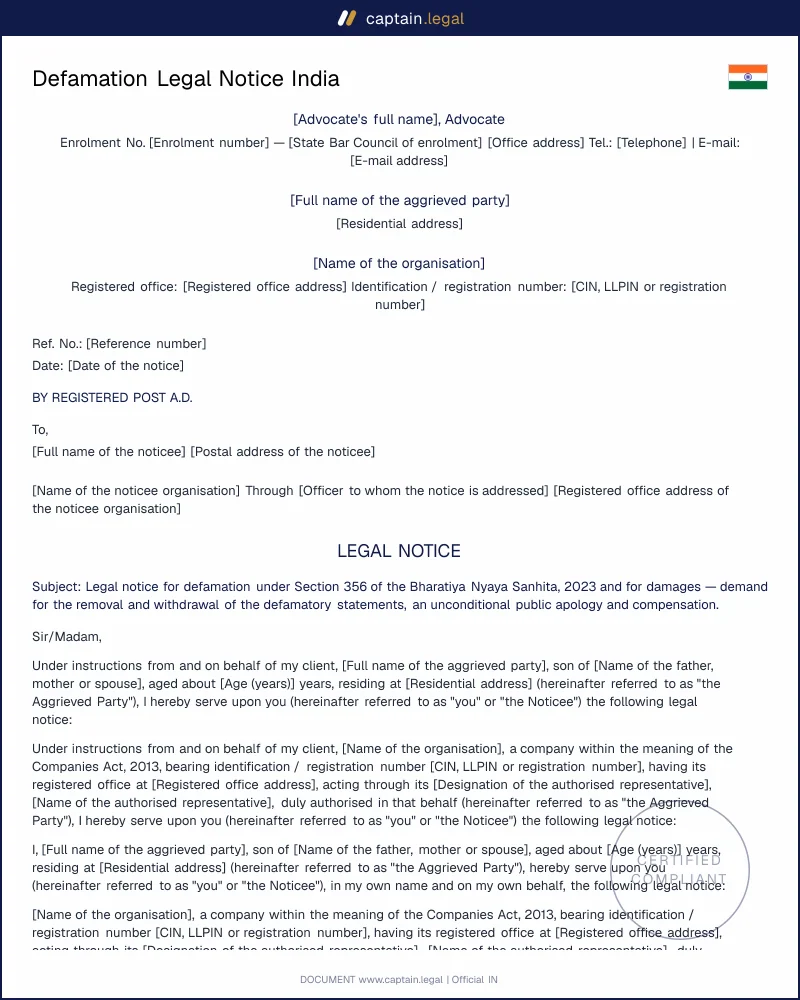
Delhi is the busiest forum for online defamation. The Delhi High Court exercises original civil jurisdiction above its pecuniary threshold and has issued John Doe orders against unknown uploaders and, in Swami Ramdev v. Facebook (2019), a direction to disable defamatory videos globally. In Khawar Butt v. Asif Nazir Mir (2013) it applied the single publication rule, so the limitation period for online content runs from first upload. Because Section 19 CPC lets a plaintiff sue where the wrong occurred or where the defendant resides, the notice should state where the sender lives and where the content was read.
Maharashtra concentrates media, film and financial services disputes. The Bombay High Court keeps original side jurisdiction for Mumbai city, and court fees on a damages claim follow the Maharashtra Court-fees Act, 1959, which makes the compensation figure in your notice more than a negotiating number. A notice about a Marathi article should quote the original text with a certified translation.
Tamil Nadu has a line of Madras High Court decisions quashing State-initiated criminal defamation complaints against journalists, holding that the Public Prosecutor route now in Section 222(2) BNSS cannot be used to silence criticism. A notice aimed at a Chennai media house should lead with the civil claim. Suits are valued under the Tamil Nadu Court-Fees and Suits Valuation Act, 1955.
Karnataka sees many employer and startup disputes out of Bengaluru. Damages suits begin before the City Civil Court and are valued under the Karnataka Court-Fees and Suits Valuation Act, 1958, and applications for interim injunctions there now follow the Bloomberg v. Zee standard.