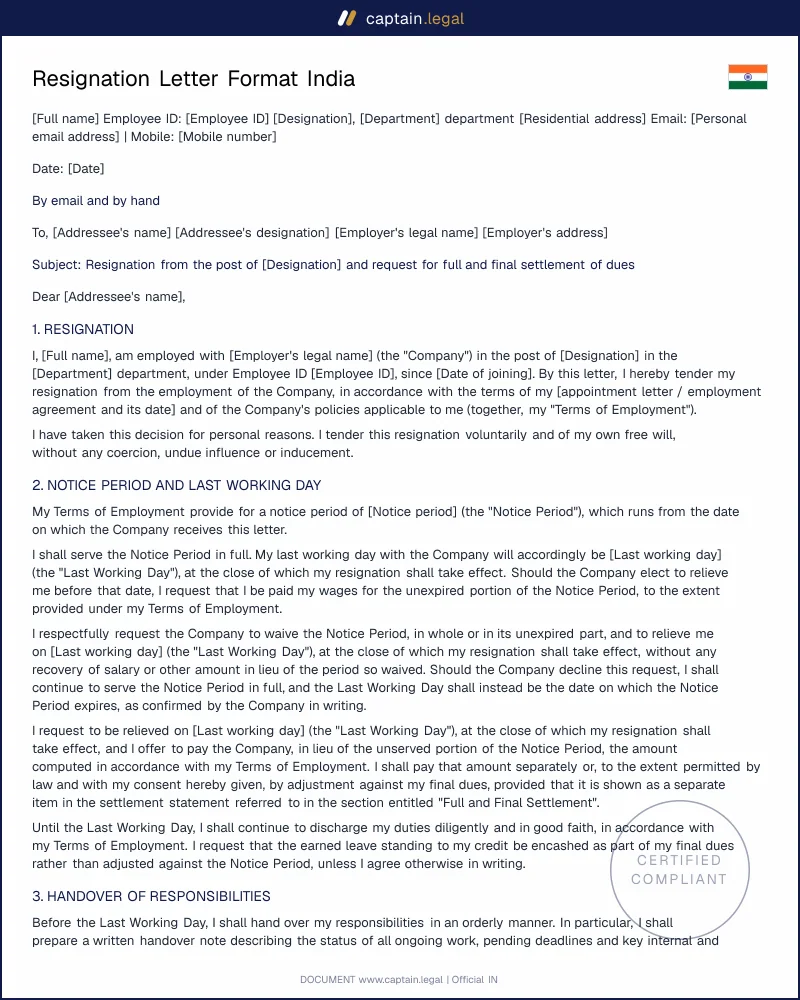
The four Labour Codes came into force on 21 November 2025, consolidating 29 central labour laws into the Code on Wages, 2019, the Industrial Relations Code, 2020, the Code on Social Security, 2020 and the Occupational Safety, Health and Working Conditions Code, 2020. They did not repeal the State Shops and Establishments Acts, which still govern registration, leave and service conditions in most offices. For a departing employee, the most visible change is Section 17(2) of the Code on Wages, which requires wages due to an employee who has resigned to be paid within two working days of the resignation, as the official India Code text of the Code on Wages, 2019 shows. The provision speaks of the resignation itself, yet practitioners read it as running from the effective date of exit, since wages for the notice period cannot fall due before the notice is served. A resignation letter that states a clear last working day removes the argument about when the two days begin.
Deductions are tightly controlled. Section 18 lists the deductions an employer may make from wages, and recovery of notice pay is not one of them in terms. Employers therefore rely on a contractual set-off or on the employee's written consent, and your letter should never concede a blanket right to recover "any dues". Gratuity follows a different track: Section 53 of the Code on Social Security, 2020 makes it payable on resignation after five years of continuous service, while fixed-term employees receive it pro rata once they complete one year.
The Industrial Relations Code, 2020 requires standing orders in establishments with 300 or more workers, and those standing orders set the notice a permanent worker must give. Section 27 of the Indian Contract Act, 1872 voids post-employment non-compete clauses, although the Supreme Court in Vijaya Bank v. Prashant B. Narnaware (2025) upheld a reasonable minimum service bond.