
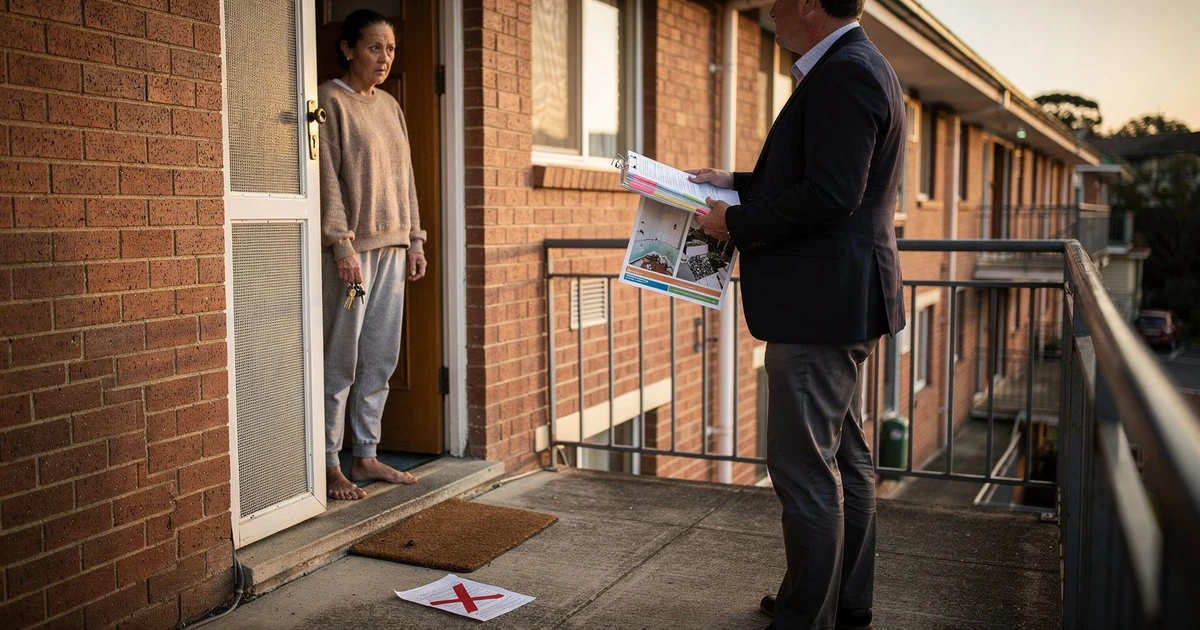
For nearly a decade, a New South Wales landlord could end a tenancy simply by running out the clock. Thirty days at the end of a fixed term, ninety days on a periodic agreement, and no reason required. That era closed on 19 May 2025. Since that date, no-grounds terminations are unlawful across the state, and every landlord who wants a tenant out must now name a prescribed ground, particularise it, and back it with evidence. This guide walks a NSW landlord or managing agent through what changed, which grounds survive, how the notice periods now fall, and how to draft a notice to vacate that will actually hold up when the matter reaches NCAT.
The stakes are higher than they look. A notice that names no valid ground, or names one it cannot support, is not a weak notice. It is a void one, and a void notice buys nothing but a wasted tribunal fee and a fresh start.
What changed on 19 May 2025
The reform arrived through the Residential Tenancies Amendment Act 2024, which rewrote the termination provisions of the Residential Tenancies Act 2010 (NSW). The old sections 84 and 85, which let a landlord end a fixed-term or periodic agreement without stating any reason, are gone. In their place sits a closed list of grounds, and a landlord may end a tenancy only by relying on one of them. The change applies to both fixed-term and periodic agreements, which matters because a common misconception holds that the ban bites only on ongoing tenancies. It does not. A landlord can no longer wait for a fixed term to expire and simply decline to renew without a reason.
Two procedural obligations arrived alongside the substantive change. First, most grounds now require supporting evidence served with or available to justify the notice, not merely asserted at the hearing. Second, every termination notice must be accompanied by a Termination Information Statement, a document published by NSW Fair Trading that sets out the tenant's rights and the landlord's obligations. Serving a notice without that statement is a compliance failure in itself, independent of whether the underlying ground is sound. Landlords who lifted their notice templates from a pre-reform precedent are the ones most exposed here, because the old forms carry none of this.
Legal framework
Termination by a landlord is now governed by Part 5 of the Residential Tenancies Act 2010 (NSW), and the grounds are prescribed rather than open. The recognised reasons include a breach of the agreement by the tenant, such as non-payment of rent; sale of the premises requiring vacant possession; significant renovations, repairs or demolition that reasonably require the tenant to move out; the end of an employee or caretaker agreement; the property ceasing to be used as a rental because the landlord or a family member intends to move in; and a set of extraordinary grounds covering the death of a sole tenant, premises rendered uninhabitable, and hardship. Each ground carries its own notice period and its own evidentiary demands.
Where a landlord ends a tenancy on an owner-purpose ground, a re-letting restriction applies. If the stated reason was sale or renovation and the landlord then re-lets the property within the exclusion period without genuine cause, the landlord commits an offence unless NSW Fair Trading has approved an earlier re-let after a change-of-circumstances application. Issuing a notice on a ground the landlord does not genuinely hold, or filing false supporting documents, is a criminal offence, not a mere procedural slip. The tribunal can also set aside any notice it finds retaliatory, meaning one given because the tenant asked for repairs or asserted a right. The authoritative reference for the current periods is the NSW Government guidance on minimum notice periods for ending a residential tenancy, which reflects the post-reform table. If you are still setting up the tenancy that these rules will later govern, the underlying agreement sits in our Australian residential tenancy and real estate templates.
The grounds and their notice periods
Getting the notice period right is where most notices come apart, because the number turns on the ground, the agreement type, and the length of any fixed term. Start with breach of the agreement, the most frequent trigger. Non-payment of rent, water usage or other charges attracts 14 days, and the notice can take effect before a fixed term ends. The tenant retains a right to defeat the notice by paying the arrears in full or entering a repayment plan, so a landlord counting on a clean exit from a 14-day arrears notice should not assume vacant possession follows automatically.
The owner-purpose grounds carry the long periods. Proposed sale, significant renovation, change of use, or the landlord or a close family member moving in each require 90 days on a periodic agreement or on a fixed term longer than six months, dropping to 60 days on a fixed term of six months or less. An actual sale, where a contract for sale requiring vacant possession has been exchanged, sits apart at 30 days. Where the premises are destroyed or become wholly unusable, termination can take effect immediately, and the death of a sole tenant permits immediate termination directed to the personal representative rather than the deceased's address.
A practical trap lurks in the renovation ground. A landlord cannot rely on significant repairs or renovations as a ground if an NCAT repair order or a rectification order is currently in force over the property. The provision exists precisely to stop a landlord from dressing up retaliation as refurbishment after a tenant has successfully complained about the condition of the home. In practice, most disputes on this ground now turn on whether the works genuinely require vacant possession, so a landlord relying on it should hold a signed building contract or equivalent before serving anything.
Drafting a notice that survives scrutiny
A valid NSW termination notice is a written document, signed by the landlord or an agent with written authority, that states the termination date, identifies the ground, and gives adequate particulars of that ground. The particulars requirement is where thin drafting fails. "The tenant has breached the agreement" tells NCAT nothing and gives the tenant nothing to answer. The notice must name the term breached, describe the conduct, and, for arrears, state the amount outstanding and the rent periods it covers. A notice that merely gestures at a breach without specifics invites a challenge the landlord will usually lose.
Every tenant named on the agreement must appear on the notice. A notice that omits a co-tenant, typically a partner who is on the lease but not on the rent ledger, is ineffective against that person, who stays in lawful possession and renders any eventual possession order unenforceable against the household. The termination date must be calculated from the day after service, and the method of service changes the arithmetic: postal service adds business days, and a date counted from the day of posting rather than deemed receipt will be short. A short notice is not a minor defect to be waved through at the hearing. It is a void notice. Because tenancy termination often intersects with an on-site caretaker or manager arrangement, a landlord ending an employment-linked tenancy should review the employment side using our Australian employment contract and termination templates before serving, since the two notices interact.
How to prepare your notice to vacate on Captain.Legal
The document generator starts by fixing the jurisdiction, and for a NSW property it applies the post-reform rules automatically rather than leaving you to reconstruct them. You confirm whether the agreement is fixed term or periodic and, if fixed, how long it runs, because the six-month threshold drives whether the owner-purpose period is 60 or 90 days. You then select the ground, and the template opens the fields that ground requires: an arrears figure and the rent periods for a breach notice, or a description of the works and the evidence you will produce for a renovation ground.
The termination date is calculated from the service method you nominate, with the deemed-service allowance built in, which removes the single most common arithmetic error before it can happen. The Termination Information Statement is prompted as part of the pack, so you do not serve a bare notice by accident. The output downloads in Word and PDF, letting you update the particulars before service if the arrears figure moves, and giving you a clean service copy to retain exactly as served. The full range of tenant-side and personal documents sits in our Australian personal legal document library, and the complete catalogue is at our list of Australian legal document templates.
Common mistakes to avoid
The error that sinks more possession applications than any other is miscalculating the termination date, usually by counting from the day the landlord signed rather than the day of deemed service, then posting the notice and losing further days to the postal allowance. A notice one day short is no notice at all, and NCAT will refuse the possession order and send the landlord back to the start. Close behind is inadequate particulars: a notice that fails the express particulars requirement because it names a breach without stating the clause, the conduct and the dates.
The third recurring failure is treating a no-grounds approach as still available. It is not, and a notice that states no prescribed ground is void on its face. Fourth, landlords omit a co-tenant and end up with an order that cannot clear the premises. Fifth, and increasingly common since the reform, a landlord serves within weeks of a repair request or a Fair Trading complaint and hands the tenant a retaliatory eviction argument that no amount of technical compliance will cure. And a persistent misunderstanding sits underneath all of these: the notice ends the tenancy on the stated date, but it does not authorise the landlord to change the locks or take possession. If the tenant remains, the landlord applies to NCAT for a possession order, and enforcement runs through the sheriff.
Frequently asked questions
Can a NSW landlord still evict without giving a reason in 2026?
No. Since 19 May 2025, no-grounds terminations by a landlord are unlawful in New South Wales for both fixed-term and periodic agreements. Every termination notice a landlord serves must now identify a prescribed ground under Part 5 of the Residential Tenancies Act 2010, give adequate particulars of that ground, and be accompanied by a Termination Information Statement. A notice that states no ground, or names one the landlord cannot genuinely support with evidence, is void rather than merely defective. If you cannot identify a proper ground on your actual facts, serving a notice anyway produces nothing but a wasted tribunal fee and the need to start over.
Is a notice to vacate generated online legally valid in NSW?
A notice is valid because it satisfies the content requirements of the Residential Tenancies Act 2010, not because of where it was drafted. A notice that states a prescribed ground, gives proper particulars, sets a compliant termination date, is signed by the landlord or an authorised agent, and is served correctly with the Termination Information Statement operates as a statutory termination notice and grounds a possession application at NCAT. What no template can do is validate a ground that does not exist on your facts or rescue a notice served for a retaliatory purpose. The document does the drafting correctly; the landlord still has to hold a genuine ground and serve it properly.
How much notice must I give a tenant in New South Wales?
The period depends entirely on the ground. Breach of the agreement, including non-payment of rent, and an occupant remaining in the property each attract 14 days. An actual sale with an exchanged contract requiring vacant possession attracts 30 days. Owner-purpose grounds, meaning proposed sale, significant renovation, change of use, or the landlord or family moving in, attract 90 days on a periodic agreement or a fixed term over six months, and 60 days on a fixed term of six months or less. Premises becoming uninhabitable and the death of a sole tenant permit immediate termination. Confirm the applicable period before serving, because a short notice is void.
What is a Termination Information Statement and do I have to include it?
It is a document published by NSW Fair Trading that explains the tenant's rights and the landlord's obligations when a tenancy is being ended. Since the reform, a landlord serving a termination notice must give the tenant this statement along with the notice itself. Leaving it out is a compliance failure independent of whether the ground is sound, so a technically perfect notice served without the statement still exposes the landlord to challenge. You can obtain the current version from the NSW Fair Trading website, and a properly assembled notice pack includes it as a matter of course rather than as an afterthought.
What format can I download the notice in?
The notice downloads in both Word and PDF. The Word file lets you amend the particulars before service, which matters for arrears notices where the outstanding figure shifts with each rent period, and lets you add grounds if your circumstances change. The PDF is the service copy: fixed content and clean pagination, suitable for personal delivery or registered post. Retain the PDF exactly as served, together with your record of the service method, date and time, because that record is precisely what NCAT will ask to see if the tenant disputes when and how the notice was given.
Can the tenant challenge the notice at NCAT?
Yes, and on broader grounds than many landlords expect. The tenant can dispute the factual basis of the ground, argue that the particulars or form are defective, argue that the termination date falls short, or apply to have the notice set aside as retaliatory. A tenant who receives a notice given because they tried to enforce a legal right, such as requesting repairs, can ask the tribunal to declare the notice retaliatory and of no effect, regardless of how technically clean it is. A landlord serving shortly after a repair dispute should expect this argument and should be able to document that the decision to end the tenancy predates the complaint.
Do I still need an NCAT order after the notice period ends?
Almost always, yes. The notice ends the tenancy on the termination date, but it does not authorise the landlord to change locks, remove belongings or retake the premises. If the tenant remains after the termination date, the landlord applies to NCAT for a possession order, and enforcement then runs through the sheriff. Taking possession without an order is unlawful and exposes the landlord to compensation orders that can dwarf the rent at stake. The termination notice is the first step of a two-step process, never a self-executing remedy, and skipping the tribunal stage is one of the fastest ways for a landlord to move from being owed money to owing it.