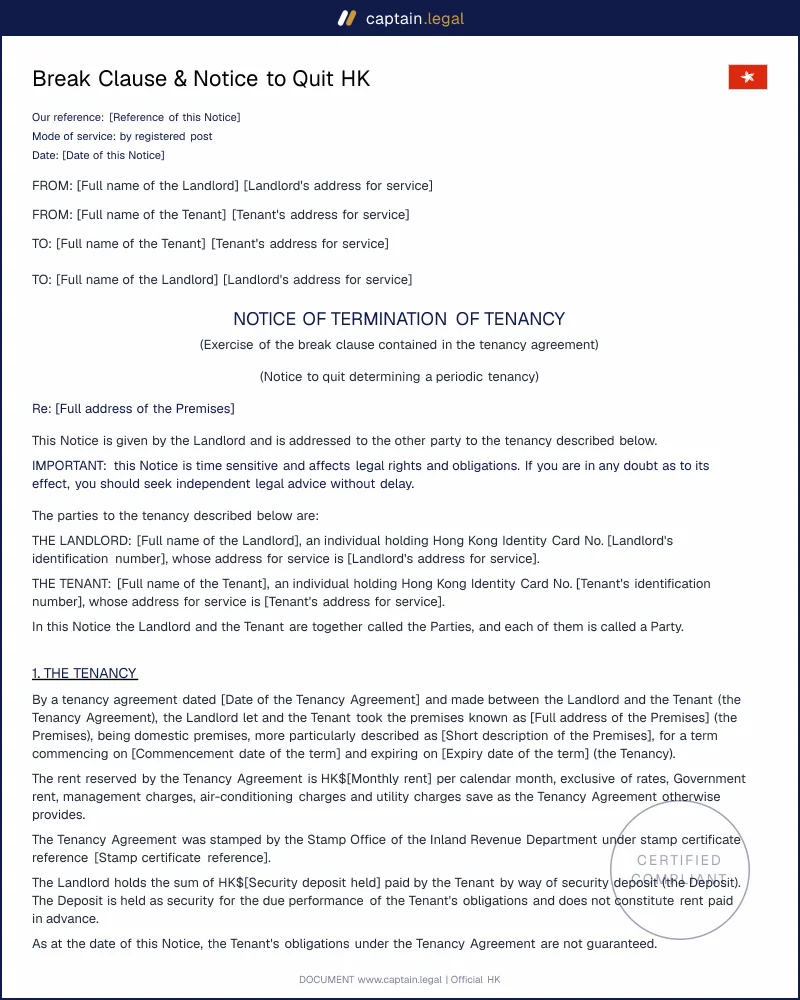
Domestic flats on the standard two year term are the mainstream case. The break opens after twelve months, the notice period is one or two months, and a security deposit of two months' rent is market practice, refundable after deductions evidenced by the inventory taken at handover. Nothing in Cap. 7 holds that deposit in a statutory scheme, so the written reconciliation in the notice does the work a custodial scheme does elsewhere.
Non-domestic and commercial premises rely on the freedom Part V leaves the parties, and the drafting is heavier. Reinstatement is the flashpoint: an office tenant who has fitted out the floor is normally required to strip back to bare shell before the break date, and a break conditional on reinstatement is not satisfied by a promise to do it later. Where a surrender is negotiated instead, it should be documented by deed under Cap. 219.
Subdivided units sit under their own regime. Part IVA of Cap. 7 gives the tenant of a regulated tenancy a first and second term of two years each, requires a Notice of Tenancy (Form AR2) to be lodged with the Rating and Valuation Department within 60 days of commencement, and restricts termination by the landlord before expiry.
Village houses in the New Territories need a title check first. Ownership is often split among family members, and a notice signed by one co-owner where the tenancy names three binds nobody. A Land Registry search against the lot settles the point in minutes.
Serviced apartments often fall outside tenancy law when the operator retains control and provides services. What reads as a break clause is usually a termination right in a licence, and Cap. 7 does not apply. Comparing it against a full tenancy agreement drafted for Hong Kong lettings is the quickest way to tell which you hold.