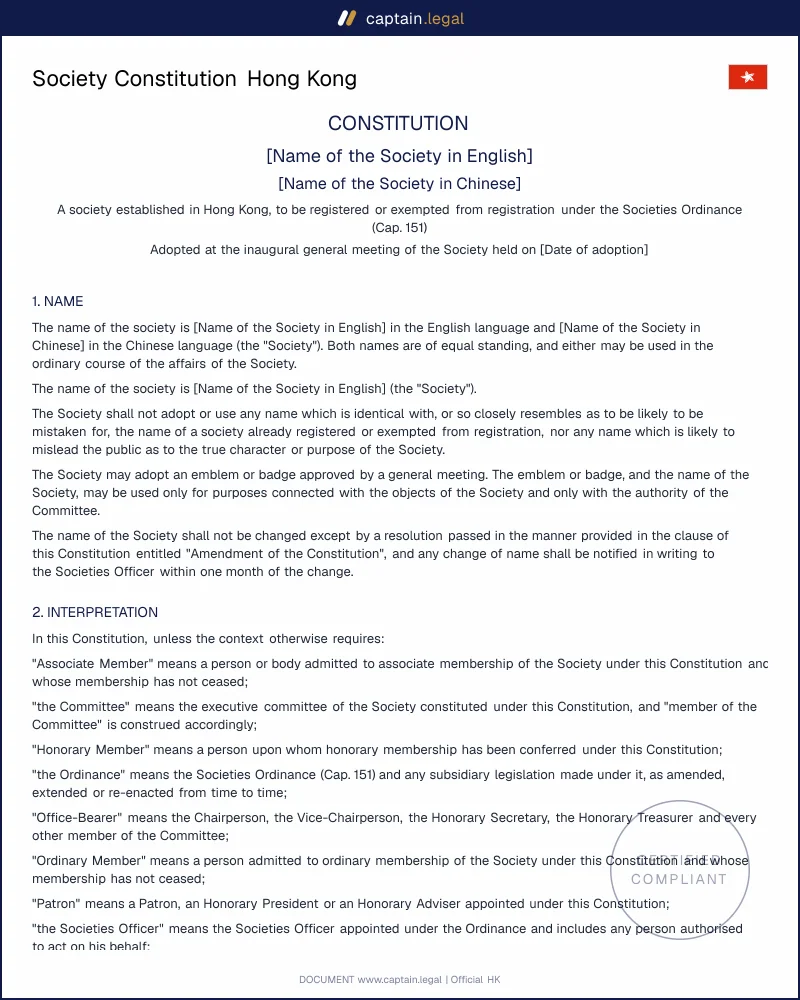
Section 5(1) of the Societies Ordinance is short and unforgiving. A local society applies in the specified form to the Societies Officer, an office held within the Hong Kong Police Force, within one month of its establishment or deemed establishment under section 2(2B) or section 4. Three office-bearers must sign. The application states the name, the objects, the particulars of every office-bearer and the address of the principal place of business. It travels with identity documents, proof of that address and, where the premises belong to somebody else, the occupier's written consent. No fee is payable, and three office-bearers may file it themselves, by post or through the Police Licensing Office electronic service.
Registration and exemption sit side by side. A body established solely for religious, charitable, social or recreational purposes, or as a rural committee, may ask to be exempted instead, and the difference is largely cosmetic: the process and the obligations are the same either way. A refusal opens an appeal to the Chief Executive in Council under section 5B, lodged within thirty days of the notice. Once registered, the society appears on the list kept open to public inspection under section 11(1), and the data supplied may be released on request under sections 11(2) and 12. The procedural detail sits in the Hong Kong Police Force guidance on society registration and exemption.
Two continuing duties catch committees off guard. Any change of name, objects, office-bearers or principal place of business must reach the Societies Officer within one month under section 10, and a society that dissolves itself reports that within one month under section 14(1). Both clocks run from the event, not from the next committee meeting. Cap. 151 also preserves the power to cancel a registration under section 5D and the power of the Secretary for Security to prohibit a society's operation under section 8, provisions revisited by the Safeguarding National Security Ordinance (6 of 2024).