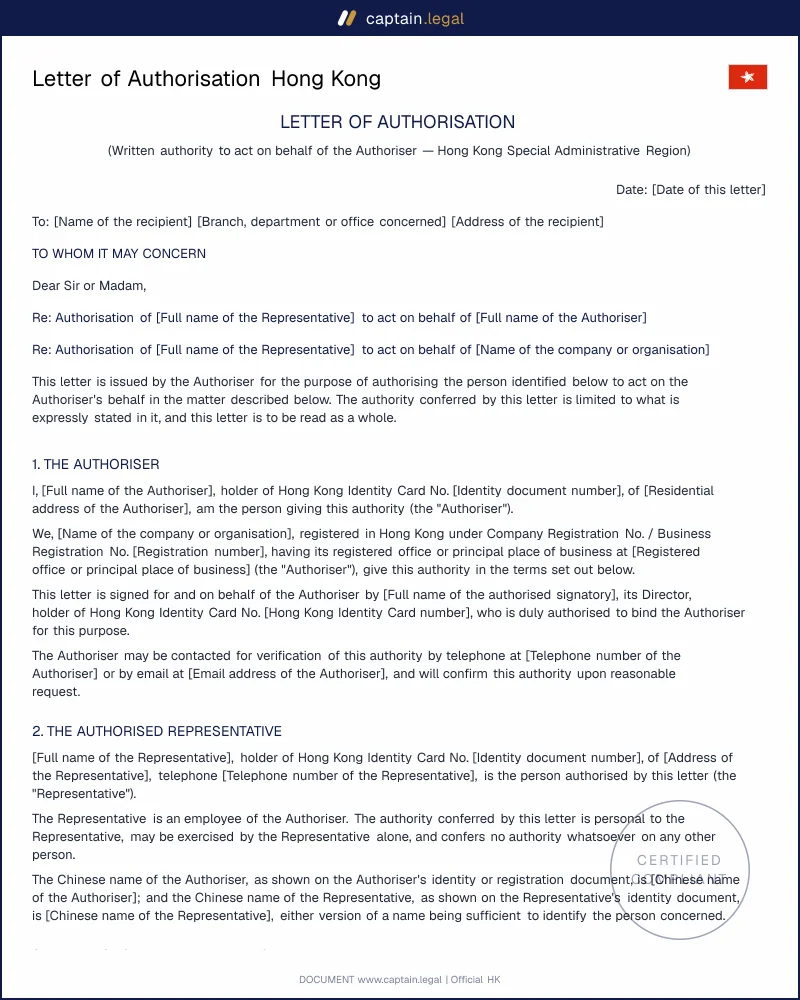
Government departments are the most predictable and the most formalistic. Immigration, the Transport Department, the Companies Registry and the Inland Revenue Department work from published requirements: the representative must usually be 18 or over, must produce their own HKID, and the letter must state the names and HKID numbers of both parties. Several forms, including those under the Registration of Persons Regulations (Cap. 177A), want the authorisation attached when the application is filed.
Banks and financial institutions are the hardest audience. A letter gets documents delivered and a statement collected at branch discretion, but it will not open, operate or close an account. Banks register powers of attorney and want the original or a solicitor-certified copy. They also carry a duty under the Anti-Money Laundering and Counter-Terrorist Financing Ordinance (Cap. 615) to verify anyone purporting to act for a customer, so the representative faces identity checks in their own right.
Hospitals and clinics treat the letter as a data access authorisation. Requests for medical records engage section 18 of Cap. 486, and the records office checks that it identifies the patient, the records sought and the person collecting them. Verbal authority from a relative is not enough. Schools and universities often publish their own transcript form, and where they do, use theirs and attach your letter as support.
Property managers, couriers and logistics operators accept a letter readily for parcels, keys and access, though house rules may add a registration step. Where the arrangement is a tenancy, the mandate should match our Hong Kong tenancy and property templates, particularly on who may hold keys.