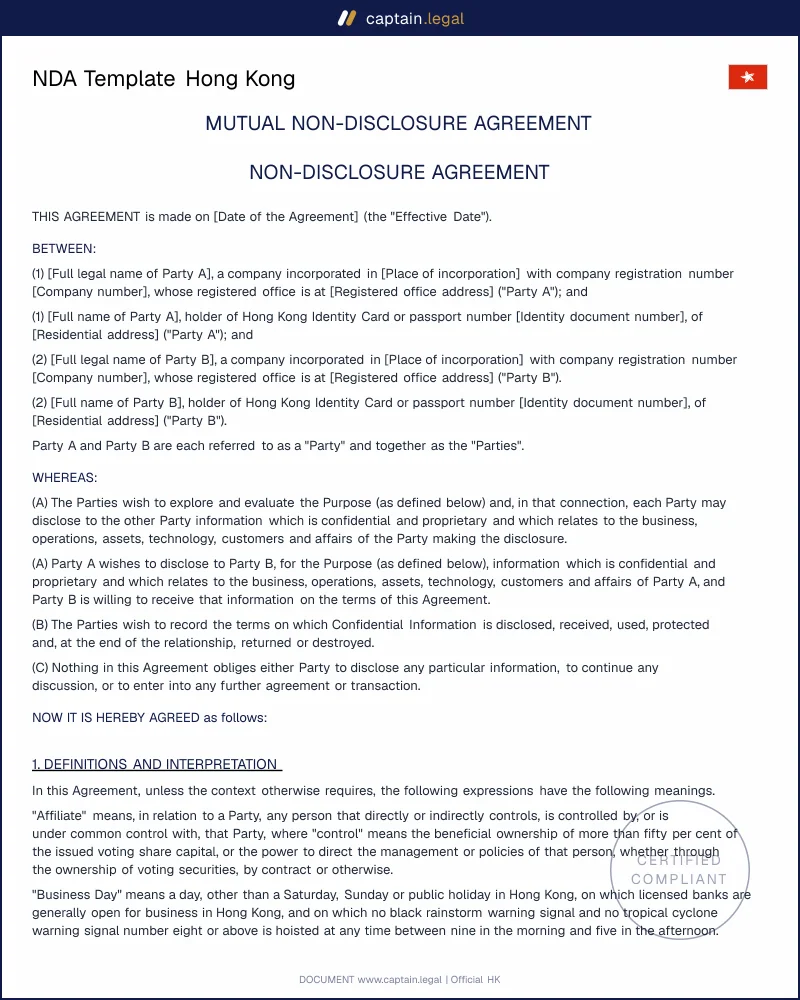
Commercial due diligence is the classic trigger. Before a buyer sees management accounts, customer contracts or margin data, the seller wants a signed one-way NDA on file, and if the buyer discloses its own funding structure the document becomes mutual. Supplier and contractor relationships come next, where a manufacturer in the Pearl River Delta, a software developer or an outsourced payroll provider receives specifications, drawings or staff records. Investor conversations come third, though most institutional venture funds in Hong Kong decline to sign at the pitch stage.
Employment and consultancy sit slightly apart. During employment an implied duty of fidelity already restricts disclosure, but after termination that protection narrows sharply, which makes an express and carefully particularised confidentiality clause the only reliable route. The same logic covers non-executive directors, advisers and volunteers, including those on the committees of societies and charities that rely on their own governance documents for Hong Kong non-profit organisations.
Two edge cases deserve a second look. The first is the beauty parade, where an agency or an architect pitches for work and hands over a concept the client later builds in-house; only a signed NDA turns that into a claim. The second is the family business succession discussion, where valuations and shareholding intentions circulate among relatives who sign nothing. Silence between family members is not a defence to disclosure, and the missing document is what makes those disputes so hard to run.