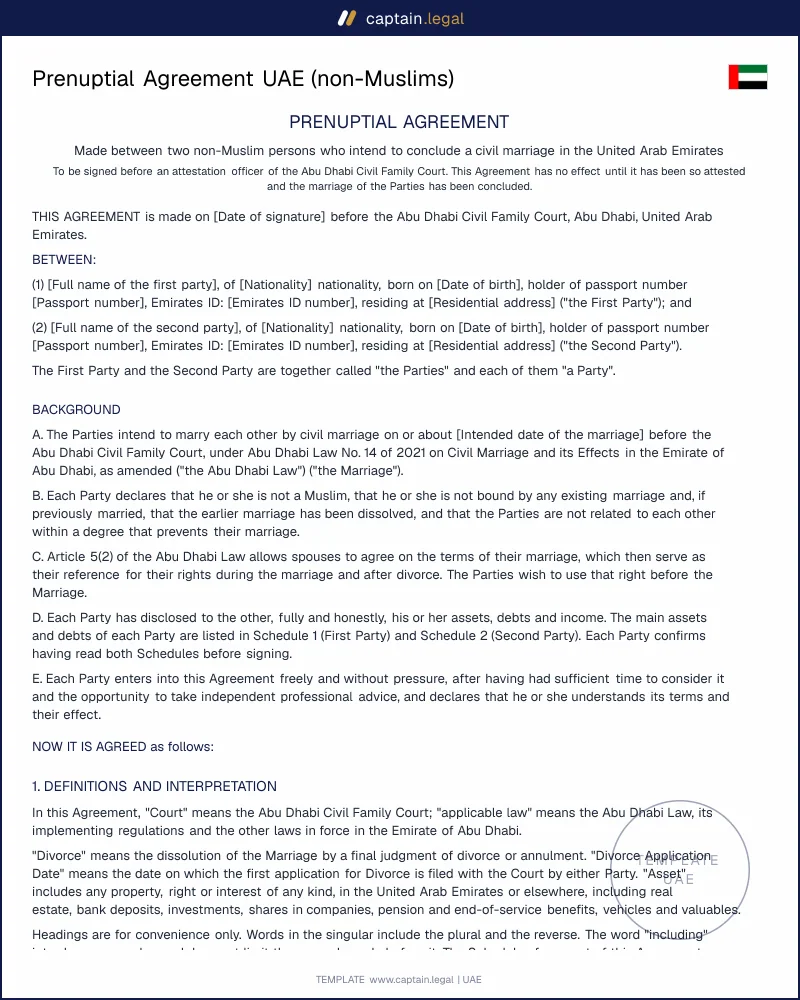
Two regimes coexist. In Abu Dhabi, Abu Dhabi Law No. 14 of 2021 on Civil Marriage and its Effects in the Emirate of Abu Dhabi, as amended, created the civil marriage, the no-fault divorce and the Abu Dhabi Civil Family Court. Article 5(2) lets spouses agree on the terms of their marriage, which become their reference for rights during the marriage and after divorce. Article 8 adds that where the marriage contract is silent on alimony, the judge fixes it, weighing in particular the length of the marriage and the economic position of each spouse. The implementing regulations, ADJD Chairman Decision No. 8 of 2022, keep the court's power to approve, assess and amend the financial rights arising from a civil divorce. The Abu Dhabi Civil Family Court page on civil marriage and pre-nuptial agreements explains that a marriage agreement is optional, is filed with the civil marriage application and is notarised by the court; the court's own template states that it must be in English and Arabic, certified by a legal translator, before it can be notarised.
Outside Abu Dhabi, Federal Decree-Law No. 41 of 2022 on Civil Personal Status and its Executive Regulations, issued by Cabinet Resolution No. 122 of 2023, govern the civil marriage of non-Muslims. The official UAE portal states that both spouses must be at least 21, against 18 in Abu Dhabi, that Dubai Courts offer the civil marriage to non-Muslim couples where at least one spouse lives in Dubai, and that a non-Muslim resident may instead follow the law of his or her home country. Under both regimes, custody and child maintenance stay with the court and the child's best interests, whatever the spouses sign. Abu Dhabi law, for instance, makes custody after divorce joint and equal between the parents until the child is 16, unless the court decides otherwise. You can browse the other templates for couples and parents on the UAE family documents page.

 UAE federal law 2026